How Is Pipe Buried For Water Lines?

Learn how water lines are buried underground, what materials plumbers use, and why hiring Spot On Plumbing, a veteran-owned Tulsa plumbing company, ensures expert service with a 5-year warranty on PEX pipe and a 2-year warranty on bury hydrants.

Hi, Brandon Brown here from Spot On Plumbing of Tulsa. I get asked all the time, “How is pipe buried for water lines?” Whether you’ve had a water leak in your yard, are building a new home, or just want to know what’s under the ground that brings water to your house, this blog post is for you.

I’m going to walk you through how water lines are buried, what types of plumbing pipes we use, the depth requirements, what can go wrong, and why choosing the right plumber (like us here at Spot On Plumbing) makes all the difference. I’ll also share some of my personal tips from years of being in the field here in Tulsa.

So grab a cup of coffee, kick back, and let’s dig in, literally.

Get a Quote

Untitled design.png

Why Do Water Lines Get Buried?

Water lines are the hidden lifelines of your home. Without them, you don’t get water at the faucet, the shower, or even the fridge. They’re buried underground mainly for three reasons:

  1. Protection from freezing and weather – By putting the water line below the frost line, you keep it from freezing in cold snaps.

  2. Protection from damage – If water pipes were above ground, lawnmowers, cars, or even a kid playing in the yard could easily break them.

  3. Aesthetics and safety – Nobody wants to trip over a pipe in their yard or see ugly water lines running across the lawn.

Here in Tulsa, we have specific depths and codes we follow to make sure water lines stay safe, functional, and up to standard.

Untitled design (1).png

What Types of Pipes Do We Use?

Not all pipes are created equal. When it comes to burying water lines, a few types of plumbing pipes stand out.

1. PEX Pipe

PEX has become one of the most popular choices for new water lines. It’s flexible, durable, and resistant to freezing. At Spot On Plumbing, we’re so confident in our installs that we give a 5-year warranty on PEX pipe. That’s peace of mind you won’t find everywhere.

2. Copper Pipe

Copper is a tried-and-true material that’s been around for decades. It’s durable but more expensive. It also doesn’t handle soil conditions as well as PEX in some cases.

3. PVC or CPVC Pipe

PVC is sometimes used, especially in irrigation or lower-pressure applications. CPVC can handle hot water better but is less common underground.

4. Galvanized Steel (Older Homes)

If you live in an older home in Tulsa, you might still have galvanized steel water lines. These corrode over time and are a common cause of water leaks we repair.

How Deep Do You Bury a Water Line?

One of the most common questions I get as a Tulsa plumber is: “How deep do you bury a water line?”

In Oklahoma, the frost line is generally around 18 inches. That means we want to bury water lines deeper than that to prevent freezing. In most cases, we’re trenching to around 24 inches deep, sometimes more depending on the property, slope, and code requirements.

The goal is to get the water line safely below the frost line, while also making sure it’s deep enough to avoid damage but not so deep that repairs are impossible.

The Step-By-Step Process of Burying a Water Line

Alright, let’s walk through the process of burying a water line. This is how we do it professionally at Spot On Plumbing:

Step 1: Planning and Locating

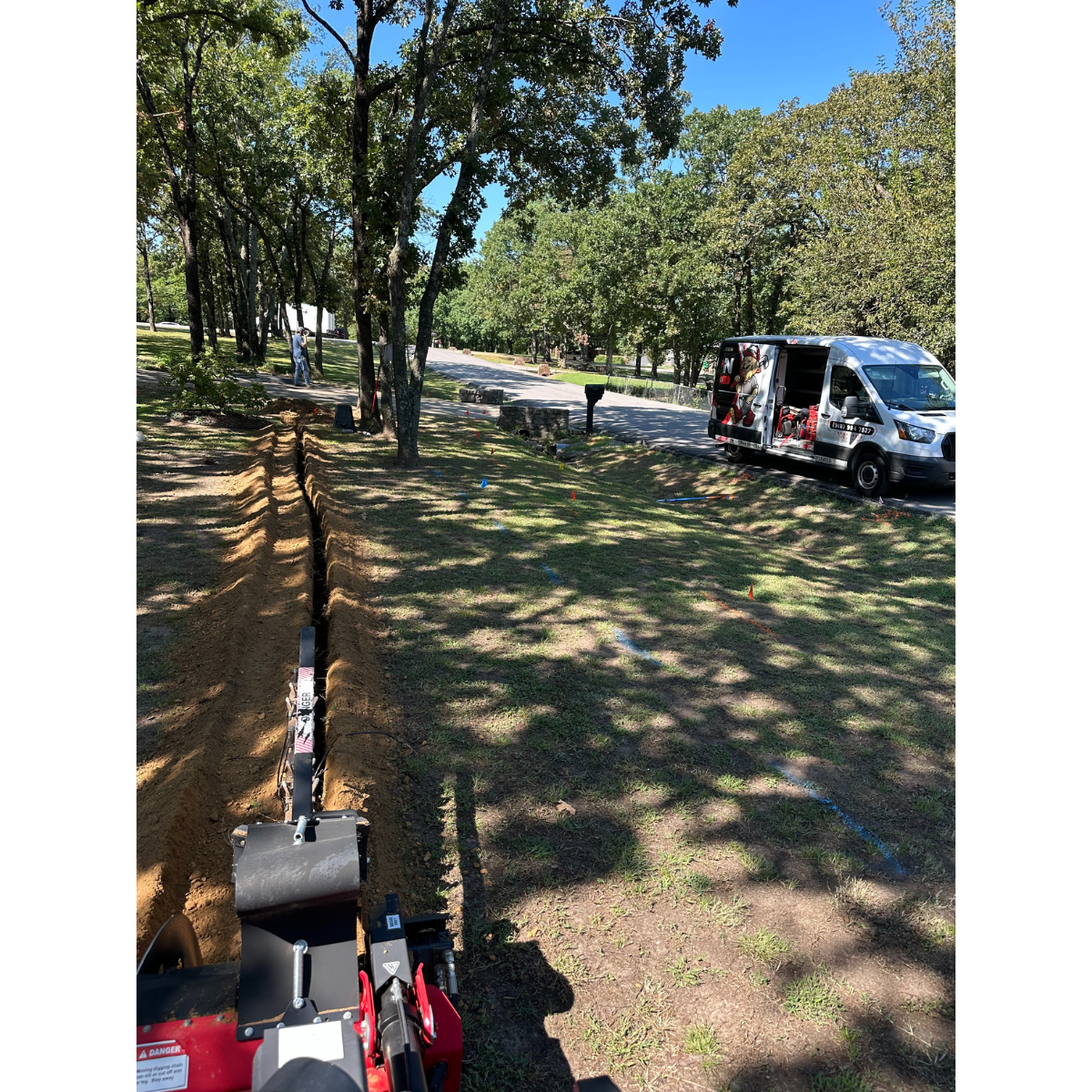
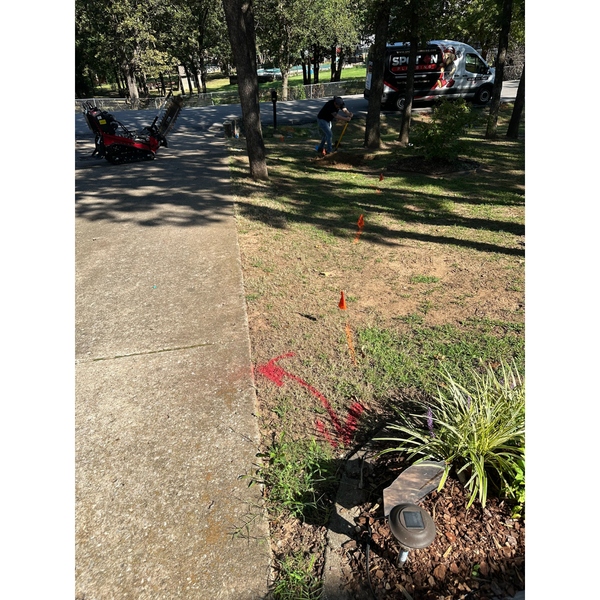
Before we dig, we always call to have utilities located. You do not want to hit a gas line or electrical line while digging. That’s dangerous and expensive.

Step 2: Trenching

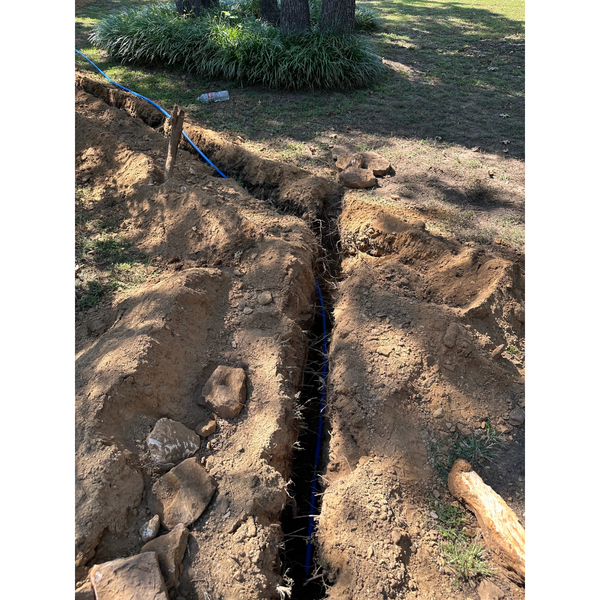
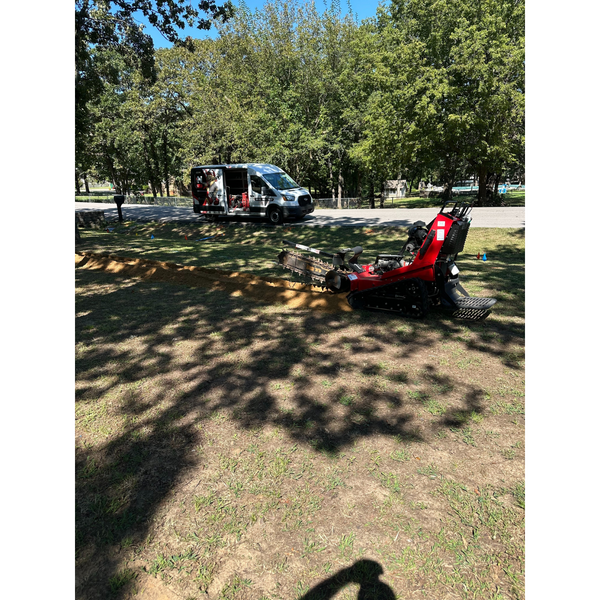
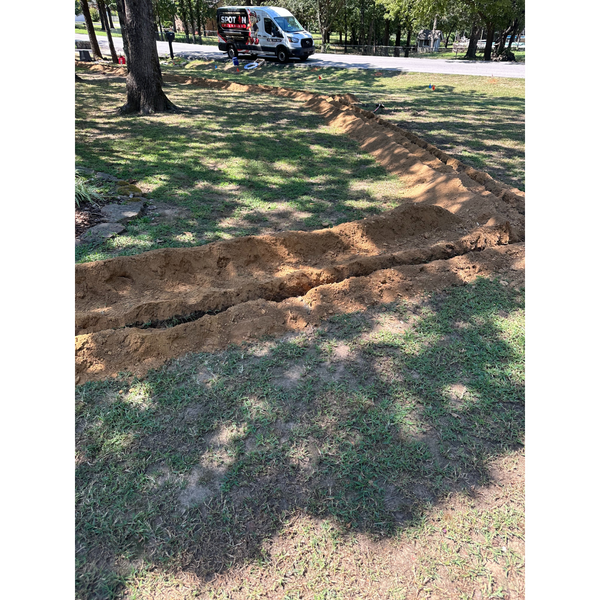
We dig a trench that’s usually around 24 inches deep. Sometimes we’ll go deeper if soil conditions require it. A trencher machine makes this a lot faster and cleaner, but we also do hand digging where precision is needed.

Step 3: Bedding the Pipe

We don’t just toss the pipe in the dirt. We make sure there’s a smooth bed of soil or sand underneath so the pipe isn’t sitting on rocks that could damage it over time.

Step 4: Laying the Pipe

The pipe gets laid in carefully with attention to slope and connections. We avoid unnecessary bends and fittings underground whenever possible, because fewer joints = fewer chances for a water leak.

Step 5: Pressure Testing

Before we cover the pipe, we test it. We’ll pressurize the line with air or water to make sure there are no leaks.

Step 6: Backfilling

Once the test checks out, we carefully backfill the trench. First with soft soil or sand around the pipe, then with the original dirt. We compact as we go so the ground doesn’t settle weird later on.

Untitled design (2).png

Common Mistakes When Burying Water Lines

I’ve been doing this long enough to see a lot of DIY water line projects go wrong. Here are the biggest mistakes people make:

  • Not going deep enough – If your line isn’t below the frost line, you risk frozen pipes.

  • Using the wrong materials – Not all pipe is rated for underground use.

  • Skipping pressure testing – If you bury it before checking for leaks, you might be digging it all back up.

  • Poor backfill – Rocks and debris can puncture a pipe over time.

  • Not pulling permits – Yes, plumbing permits matter, especially when you sell your home.

That’s why it pays to call a pro.

What About Hydrants and Yard Spigots?

Another question I get a lot: “How do you bury hydrants or yard spigots?”

We install bury hydrants (also called frost-proof hydrants) all the time, especially on rural properties or large lots. These hydrants are designed so that when you shut them off, the water drains down below the frost line, preventing freezing.

At Spot On Plumbing, we stand by our work with a 2-year warranty on bury hydrants. That’s how confident we are in our installs.

Untitled design (3).png

Signs You Might Have a Buried Water Line Leak

Sometimes homeowners don’t even know there’s a problem until the water bill shows up. Here are a few red flags:

  • Wet spots in the yard even when it hasn’t rained.

  • Mushy ground that never dries out.

  • Higher water bill than usual.

  • Low water pressure inside your home.

  • Unusual sounds in the plumbing system.

If you see these, give us a call. Finding and fixing a water leak underground is one of our specialties.

Why Hire Spot On Plumbing?

I know you’ve got options when looking for Tulsa plumbers, but here’s why homeowners and businesses trust us:

  • Veteran owned – As a veteran-owned business, we bring discipline, integrity, and commitment to every job.

  • Local expertise – We know Tulsa soil conditions, weather patterns, and codes like the back of our hand.

  • Warranty-backed work – 5-year warranty on PEX water line installs, 2-year warranty on bury hydrants.

  • Customer-first approach – We believe in doing it right the first time and explaining your options clearly.

Emergency service – Water leaks don’t wait until Monday morning, and neither do we.

Untitled design (4).png

FAQs About Burying Water Lines

Q: Can I bury my own water line?

A: Technically yes, but unless you really know plumbing codes and have the right equipment, I don’t recommend it. One mistake can lead to major leaks or frozen pipes.

Q: How much does it cost to bury a new water line?

A: Costs vary depending on length, material, and soil conditions. Every job is different, but we always provide upfront pricing at Spot On Plumbing.

Q: How long does a buried water line last?

A: PEX can last 40–50 years, copper about the same if conditions are good. Our warranties (5 years on PEX, 2 years on hydrants) give you peace of mind.

Q: Do you need permits to bury a water line in Tulsa?

A: Yes, permits are often required for major water line installs. We handle that for you.

Final Thoughts

Burying a water line might seem simple, dig a trench, drop in a pipe, cover it up, but there’s a lot more to it if you want the line to last. From picking the right pipe, to trench depth, to pressure testing, every step matters.

At Spot On Plumbing of Tulsa, we take pride in doing things the right way. Whether you’ve got a water leak, need a brand-new water line, or just want peace of mind with professional work backed by a warranty, we’re here to help.

So if you’re in the Tulsa area and wondering about your water lines, give us a shout. We’ll be happy to take a look, explain your options, and make sure your plumbing is spot on.

Get a Quote